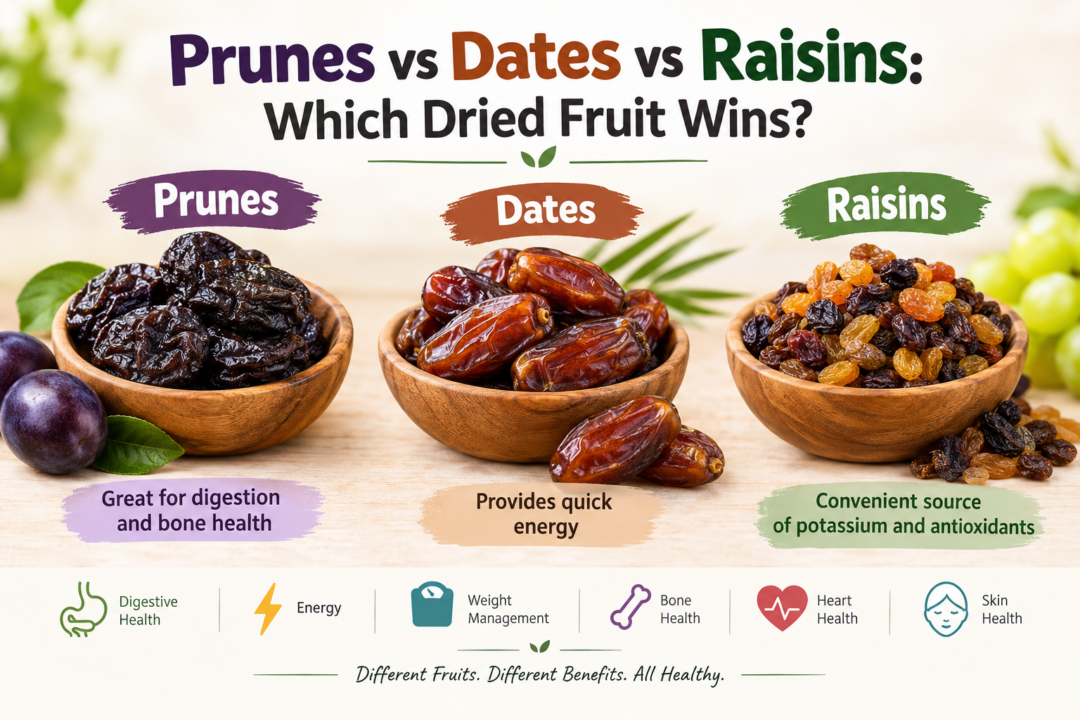
Prunes vs Dates vs Raisins :- Dried fruits are nutritious, convenient, and naturally sweet. Among the most popular options, prunes, dates, and raisins offer different health benefits. But which one is the healthiest? The answer depends on your goals, whether you want better digestion, quick energy, weight management, or essential nutrients. Let’s compare prunes vs dates vs raisins to discover their nutritional value, benefits, and the best choice for your daily diet.
What Are Prunes, Dates, and Raisins?
Prunes are dried plums known for their chewy texture, sweet-tangy flavor, and digestive benefits. They contain fiber, potassium, vitamin K, and sorbitol, which helps support regular bowel movements.
Dates are fruits of the date palm tree. They have a soft texture, caramel-like sweetness, and a high carbohydrate content. They also provide fiber, potassium, and other essential minerals.
Raisins are dried grapes that offer natural sweetness, fiber, potassium, and beneficial plant compounds. They are easy to add to breakfast, snacks, desserts, and homemade trail mixes.
Prunes vs Dates vs Raisins: Nutritional Comparison
The following table shows approximate nutritional values per 100 grams. Actual amounts vary by variety and processing method.
| Nutrient | Prunes | Dates | Raisins |
|---|---|---|---|
| Calories | 240 | 282 | 299 |
| Carbohydrates | 64 g | 75 g | 79 g |
| Sugar | 38 g | 63 g | 59 g |
| Fiber | 7.1 g | 8 g | 3.7 g |
| Protein | 2.2 g | 2.5 g | 3.1 g |
| Potassium | 732 mg | 656 mg | 749 mg |
All three provide valuable nutrients, but their concentrated calories and natural sugars make portion control important.
1. Which Is Best for Digestive Health?
Winner: Prunes
Prunes are particularly beneficial for digestion because they contain dietary fiber and sorbitol. These help draw water into the intestines, soften stools, and support regular bowel movements.
Dates and raisins also provide fiber, which contributes to healthy digestion. However, prunes are generally the better-supported choice for relieving occasional constipation.
Eating too many prunes may cause gas, bloating, or diarrhea, so start with a small portion.
2. Which Is Best for Weight Management?
All three dried fruits can fit into a weight-management diet when eaten in moderate portions.
Prunes provide fiber that may help you feel satisfied. Dates can satisfy sweet cravings, while raisins make a convenient snack when portioned carefully.
Because dried fruits contain less water than fresh fruits, their calories are more concentrated. Pairing a small serving with nuts or unsweetened yogurt can make a balanced snack.
3. Which Is Better for Blood Sugar?
Winner: Prunes may be a practical option
Prunes generally contain less sugar per 100 grams than dates and raisins. Their fiber content may also help support a balanced eating pattern.
Dates and raisins contain concentrated natural sugars, so serving size matters. People with diabetes can often enjoy dried fruits in moderation, but should account for their carbohydrate content and monitor individual blood glucose responses.
Natural sugar is still sugar, and large portions of any dried fruit can affect blood glucose.
4. Which Provides the Most Energy?
Winner: Dates
Dates are rich in carbohydrates, making them a convenient source of quick energy. They are particularly useful before exercise, during busy days, or when you need a portable snack.
Raisins also provide readily available energy and work well in trail mixes. Prunes supply carbohydrates alongside fiber, although their digestive effects may be inconvenient before intense exercise.
5. Which Is Best for Bone and Heart Health?
Winner for potential bone benefits: Prunes
Prunes provide vitamin K, potassium, and beneficial plant compounds. Some research suggests that regular prune consumption may help preserve certain measures of bone health, particularly in postmenopausal women. However, prunes cannot replace calcium, vitamin D, or appropriate medical care.
For heart health, all three dried fruits provide potassium and plant compounds that can complement a balanced diet. None independently prevents heart disease.
6. How Much Should You Eat Daily?
Moderate portions allow you to enjoy dried fruits without consuming excessive calories or sugar.
- Prunes: Around 3–5 pieces.
- Dates: Around 1–3 pieces, depending on size.
- Raisins: Approximately 2 tablespoons.
These are general serving suggestions rather than strict recommendations. Larger dates contain more calories per piece, and individual nutritional needs vary.
Final
Each dried fruit has its own strengths. Prunes are best known for digestive health, dates are excellent for quick energy, and raisins are versatile additions to everyday meals.
You do not need to choose just one. Including different dried fruits in sensible portions can add variety to your diet while helping you enjoy their individual nutritional benefits.
FAQs – Prunes vs Dates vs Raisins
1. Are prunes healthier than dates and raisins?
Prunes are particularly useful for digestive health, dates provide concentrated energy, and raisins offer potassium and plant compounds. The healthiest choice depends on your nutritional goals.
2. Which dried fruit is best for constipation?
Prunes are generally the best choice because their fiber and sorbitol help soften stools and support bowel regularity.
3. Which has the least sugar?
Prunes generally contain less sugar per 100 grams than dates and raisins, although the exact amount depends on the variety.
4. Can people with diabetes eat dried fruits?
Yes, many people with diabetes can enjoy dried fruits in controlled portions. All three contain carbohydrates, so portion size and blood glucose monitoring are important.
5. Which is best for weight loss?
None guarantees weight loss. Prunes may help with satiety because of their fiber content, but overall calorie intake matters most.